This site is inspired by the work done by Jeff Beane and Tom Thorpe in North Carolina, the original "Project Simus"
All photos and information by Glenn Bartolotti unless otherwise posted.![]() Genus: Heterodon simus Identification size: 14 - 22 inches Harmless
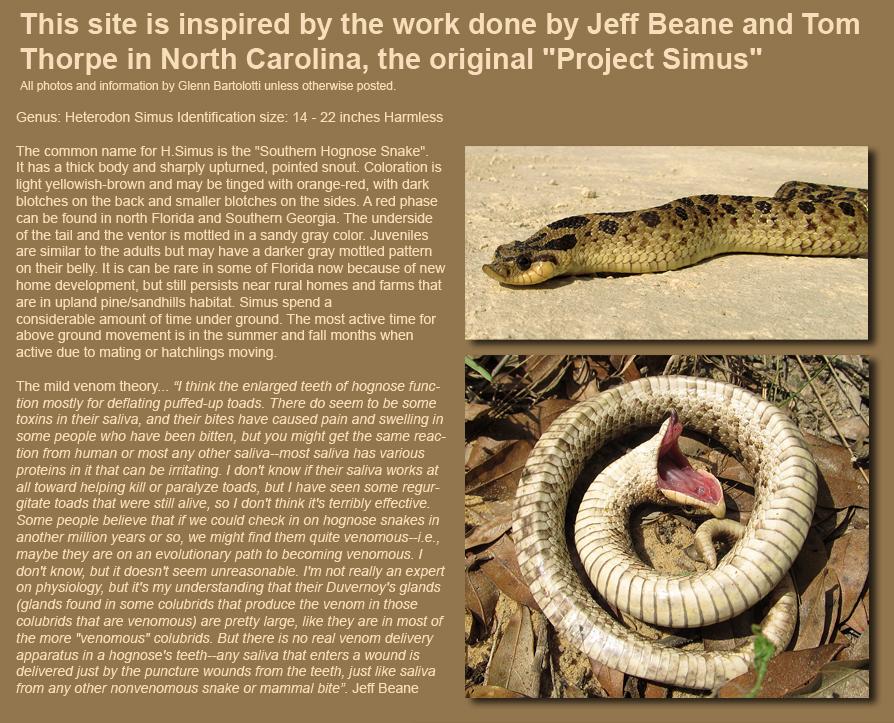
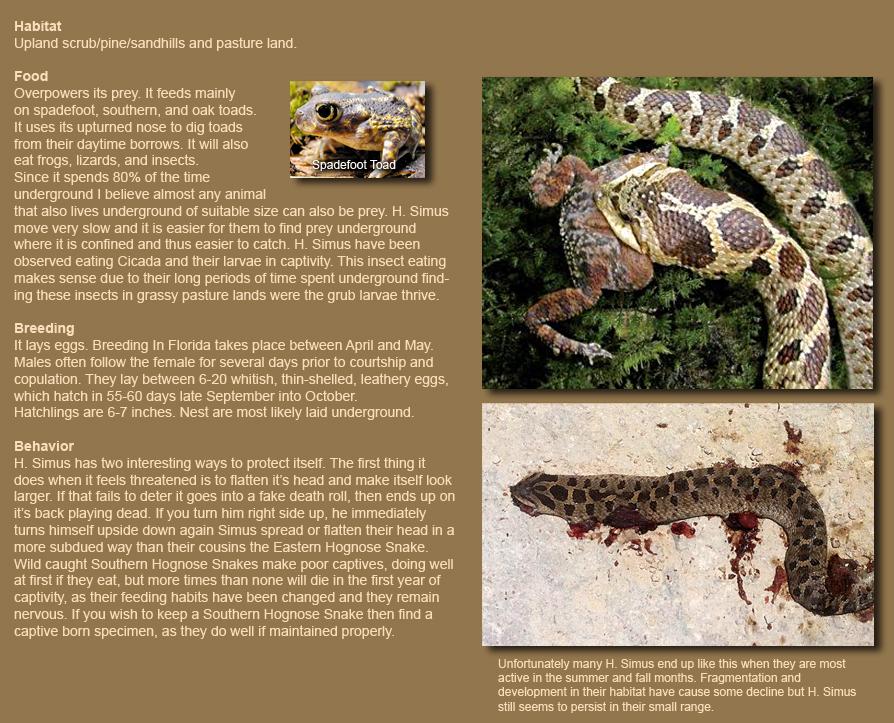
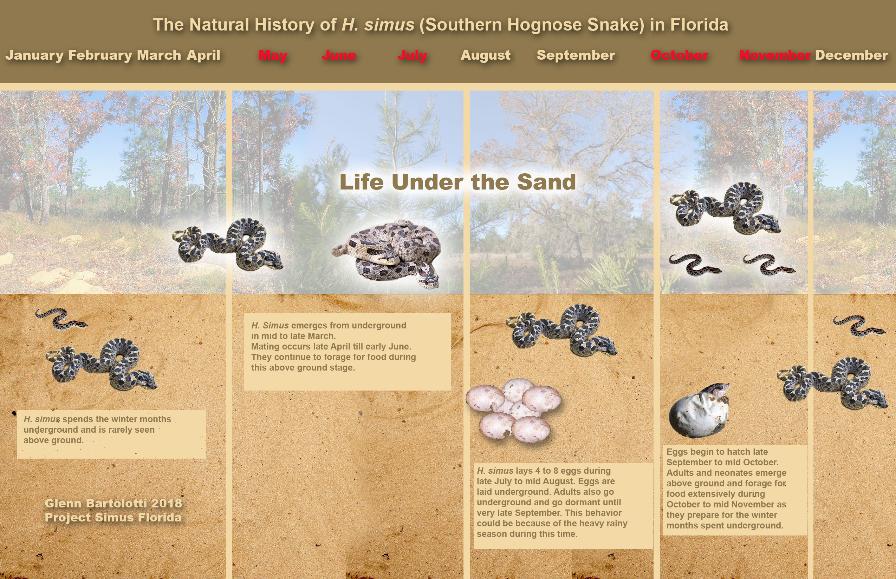
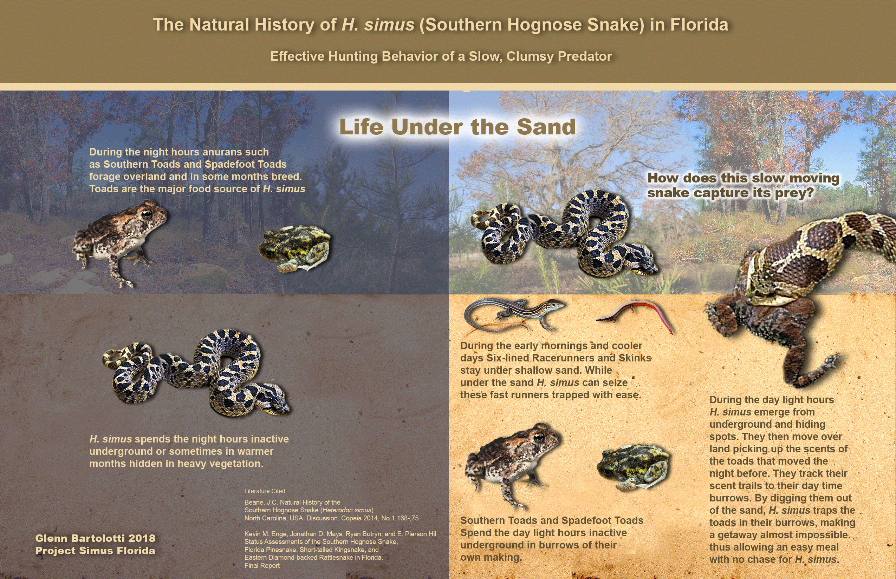
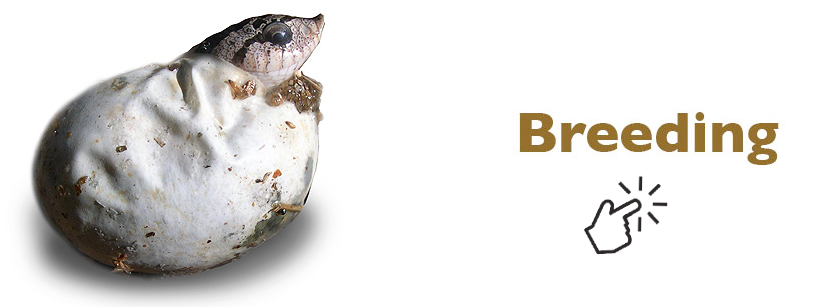
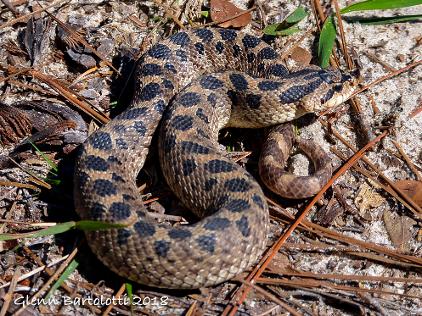
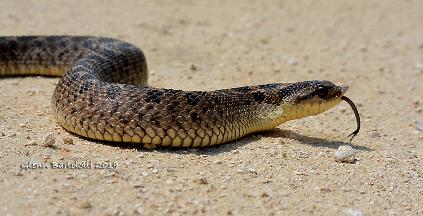
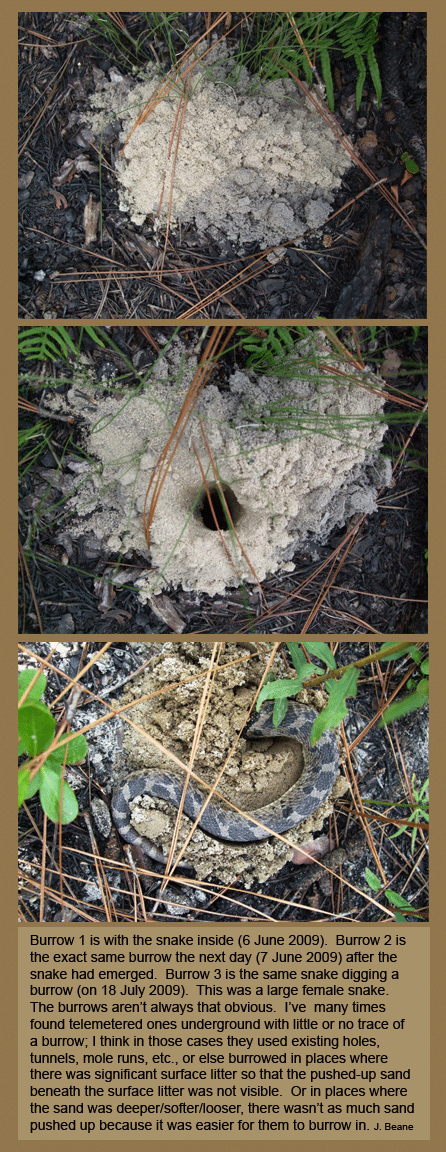
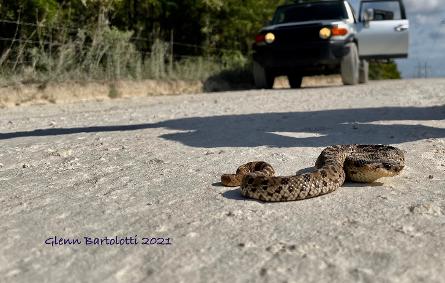
The common name for H. Simus is the "Southern Hognose Snake". It has a thick body and sharply upturned, pointed snout. Coloration is light yellowish-brown and may be tinged with orange-red, with dark blotches on the back and smaller blotches on the sides. A High red phase can be found in north Florida. The underside of the tail and the ventor is mottled in a sandy gray color. Juveniles are similar to the adults but may have a darker gray mottled pattern on their belly. It is very rare in Florida now because of new home development, but still persists near rural homes and farms that are in upland pine/sandhills habitat. Simus spend a considerable amount of time under ground. The most active time for above ground movement is in the summer and fall months when temperature are very high. The mild venom theory... I think the enlarged teeth of hognose function mostly for deflating puffed-up toads. There do seem to be some toxins in their saliva, and their bites have caused pain and swelling in some people who have been bitten, but you might get the same reaction from human or most any other saliva--most saliva has various proteins in it that can be irritating. I don't know if their saliva works at all toward helping kill or paralyze toads, but I have seen some regurgitate toads that were still alive, so I don't think it's terribly effective. Some people believe that if we could check in on hognose snakes in another million years or so, we might find them quite venomous--i.e., maybe they are on an evolutionary path to becoming venomous. I don't know, but it doesn't seem unreasonable. I'm not really an expert on physiology, but it's my understanding that their Duvernoy's glands (glands found in some colubrids that produce the venom in those colubrids that are venomous) are pretty large, like they are in most of the more "venomous" colubrids. But there is no real venom delivery apparatus in a hognose's teeth--any saliva that enters a wound is delivered just by the puncture wounds from the teeth, just like saliva from any other nonvenomous snake or mammal bite. Jeff Beane Habitat Upland scrub/pine/sandhills and pasture land. Food Overpowers its prey. It feeds mainly on spadefoot, southern, and oak toads. It uses its upturned nose to dig toads from their daytime borrows. It will also eat frogs, lizards, and insects. Since it spends 80% of the time underground I believe almost any animal that also lives underground of suitable size can also be prey. Southern Hognose Snakes move very slow and it is easier for them to find prey underground where it is confined and thus easier to catch. Simus have been observed eating Cicada and their larvae in captivity. This insect eating makes sense due to their long periods of time spent underground finding these insects in grassy pasture lands were the grub larvae thrive. Breeding It lays eggs. Breeding In Florida takes place between April and May. Males often follow the female for several days prior to courtship and copulation. They lay between 6-14 whitish, thin-shelled, leathery eggs, which hatch in 55-60 days late September into October. Hatchlings are 6-7 inches. Behavior The Southern Hognose Snake has two interesting ways to protect itself. The first thing it does when it feels threatened is to flatten it’s head and make itself look like a cobra. If that fails to deter it goes into a fake death roll, then ends up on it’s back playing dead. If you turn him right side up, he immediately turns himself upside down again. Southern Hognose Snakes spread or flatten their head in a more subdued way than their cousins the Eastern Hognose Snake. Wild caught Southern Hognose Snakes make poor captives, doing well at first if they eat, but more times than none will die in the first year of captivity. If you wish to keep a Southern Hognose Snake then purchase a captive born specimen, as they do well if maintained properly. ![]() Young female - Hernando County
![]() Remains found in Hernando County 2010
![]() ![]() Baby Simus 6 weeks old.
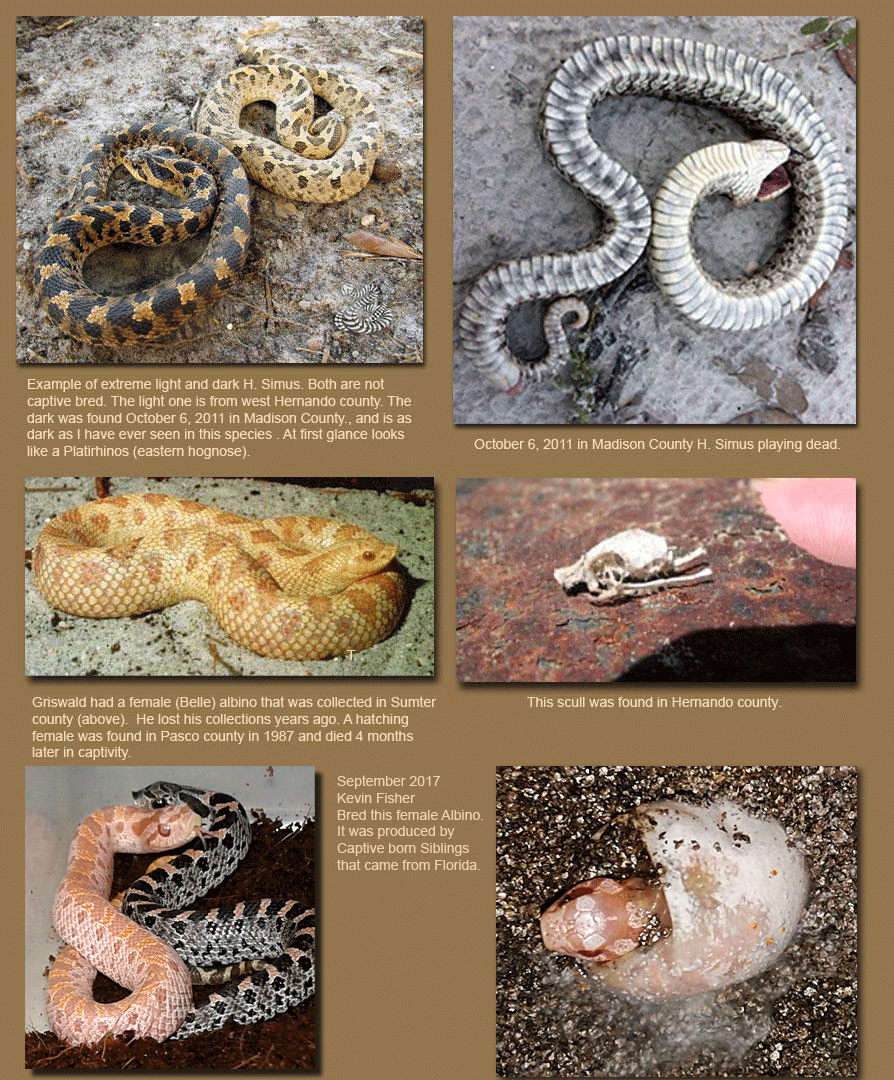
![]() 2011 Suwannee County, FL babies, note the color variation. | ![]() Example of extreme light and dark H. Simus. Both are wild Simus not captive bred. The dark one is as dark as I have ever seen in this species and at first glance looks like a Platirhinos (eastern hognose) ![]() I found this adult Female October 6th in Madison County ![]() April 2011--Photographed by a resident of San Antonio FL a city in Pasco County
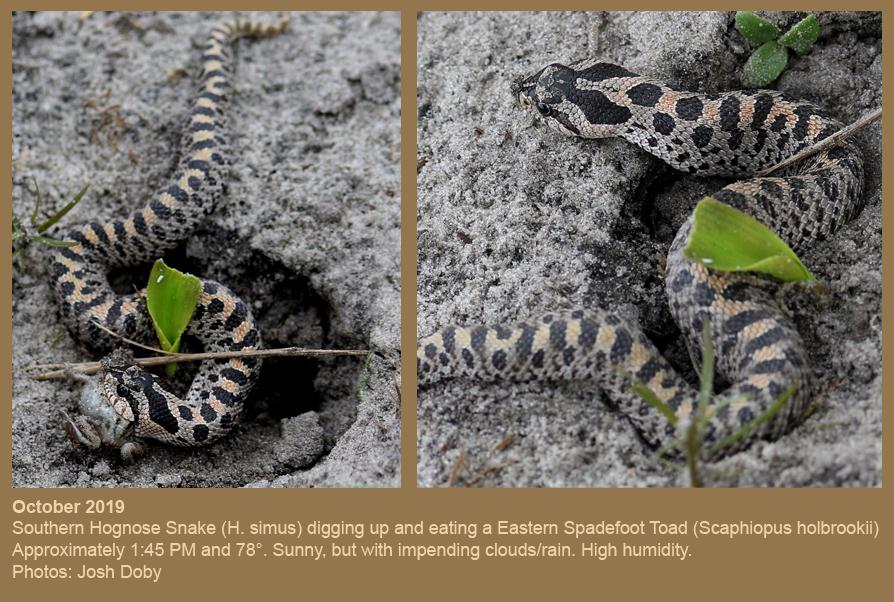
![]() Toads make up the bulk of there diet.
Southern Hognose Snakes will opportunistically feed on lizards.
Here is a female eating a Fence lizard which also lives in the sandhill scrub. ![]() Six-Line Racerunners are also eaten when found underground.
![]() Spadefoot toads are preferred most as a food source by Southern Hognose snakes
This 18.5" female was found in July 2008. It was gravid and carried 10 eggs.
![]() Griswald had a female (Belle) albino that was collected in Sumter county (above). He
lost his collections years ago. A hatching female was found in Pasco
county in 1987 and died 4 months later in captivity. No other albino Simus are known.
![]() ![]() |